
Education in 2026 is no longer just about classrooms, textbooks, and exams. It is about adaptability, technology, personalization, and lifelong learning. Students today are preparing for careers that may not even exist yet, while teachers are expected to master tools and teaching methods that were unheard of just a decade ago.
The global education system has been undergoing rapid transformation due to digital innovation, artificial intelligence (AI), remote learning, changing job markets, and evolving student needs. What once felt like “future education” is now the present reality. By 2026, these changes are no longer optional—they are essential.
This article explores the most important education trends in 2026, explaining what they mean for students, teachers, parents, and institutions. Whether you are a student planning your future, a teacher adapting to new methods, or an education blogger tracking industry changes, this guide will help you stay ahead.
Artificial Intelligence (AI) Becomes a Core Part of Education
AI-Powered Personalized Learning
One of the most significant trends in education in 2026 is the widespread adoption of artificial intelligence in learning environments. AI is no longer limited to experimental tools; it is now integrated into daily education systems.
AI-powered platforms analyze:
-
Learning speed
-
Strengths and weaknesses
-
Study patterns
-
Engagement levels
Based on this data, students receive personalized lessons, quizzes, and recommendations. Instead of one-size-fits-all teaching, learning paths are now tailored to each student.
Benefits for Students
-
Learn at their own pace
-
Get instant feedback
-
Receive customized study plans
-
Reduce exam stress
Benefits for Teachers
-
Save time on grading
-
Identify struggling students early
-
Focus more on mentoring and creativity
In 2026, teachers are no longer replaced by AI—but empowered by it.

Hybrid Learning Becomes the Standard Model
The Rise of Blended Classrooms
Hybrid learning—combining online and in-person education—has evolved from a temporary solution into a permanent system. In 2026, most institutions offer flexible learning models that allow students to switch between classroom learning and digital platforms.
Key Features of Hybrid Learning
-
Recorded lectures for revision
-
Live classroom discussions
-
Online assessments
-
Digital collaboration tools
This model supports students who:
-
Learn at different speeds
-
Balance work and education
-
Live in remote areas
Why Hybrid Learning Works
Hybrid education provides flexibility without sacrificing quality. Students benefit from face-to-face interaction while enjoying the convenience of online resources.
Skills-Based Education Takes Priority Over Degrees
The Shift from Degrees to Skills
In 2026, employers focus less on degrees and more on practical, job-ready skills. This shift has forced education systems to rethink curriculum design.
High-Demand Skills in 2026
-
Critical thinking
-
Problem-solving
-
Digital literacy
-
Communication
-
Data analysis
-
AI and automation skills
Educational institutions now integrate real-world projects, internships, and hands-on training into academic programs.
Micro-Credentials and Certifications
Instead of long degrees, students increasingly earn:
-
Short-term certifications
-
Skill badges
-
Online credentials
These credentials are faster, more affordable, and directly linked to job opportunities.
Project-Based Learning (PBL Goes Mainstream)
Learning by Doing
Project-Based Learning (PBL) is one of the most impactful teaching methods in 2026. Instead of memorizing information, students solve real-world problems through collaborative projects.
Examples of Project-Based Learning
-
Designing sustainable cities
-
Creating mobile apps
-
Solving local community problems
-
Conducting scientific research
Why PBL Matters
-
Encourages creativity
-
Builds teamwork skills
-
Improves problem-solving ability
-
Prepares students for real jobs
Teachers act as facilitators and mentors, guiding students rather than lecturing endlessly.
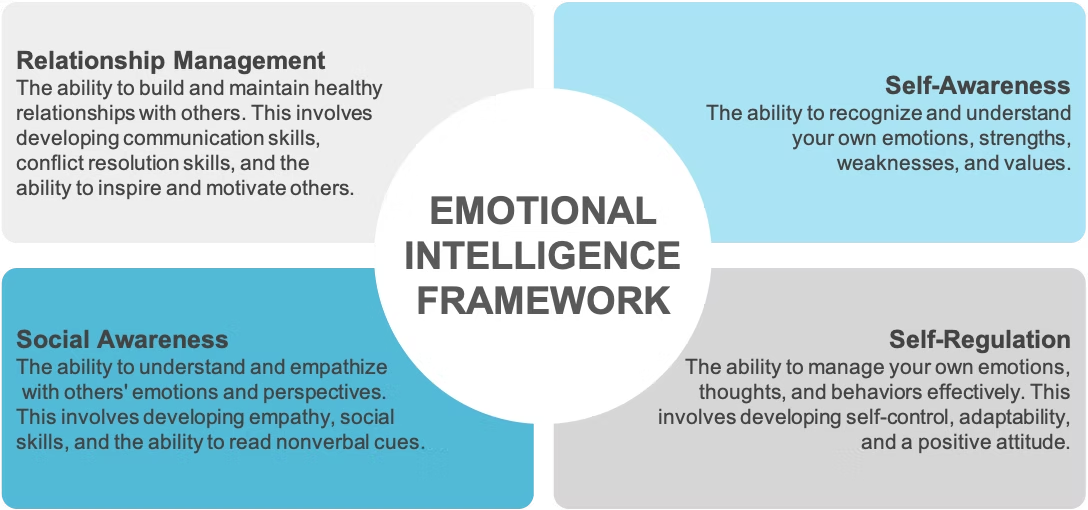
Emotional Intelligence (EQ) Becomes a Core Subject
Beyond IQ: Teaching Emotional Skills
Education in 2026 recognizes that emotional intelligence is as important as academic knowledge. Schools now focus on:
-
Self-awareness
-
Empathy
-
Stress management
-
Communication skills
Why EQ Is Essential
-
Improves mental health
-
Reduces bullying
-
Enhances leadership skills
-
Builds resilience
Students with strong emotional intelligence perform better academically and professionally.
Mental Health Support in Schools Expands
A Growing Priority in Education
Mental health awareness has significantly increased by 2026. Educational institutions now provide:
-
School counselors
-
Mental health apps
-
Mindfulness programs
-
Stress management workshops
Causes of Student Stress
-
Academic pressure
-
Social media influence
-
Career uncertainty
-
Digital overload
By addressing mental health, schools create healthier, more productive learning environments.
Gamification Makes Learning Engaging
Turning Education into an Experience
Gamification uses game elements like points, levels, leaderboards, and rewards to motivate students.
Benefits of Gamified Learning
-
Increases engagement
-
Improves retention
-
Encourages competition and collaboration
-
Makes difficult subjects fun
In 2026, subjects like math, coding, and science are often taught through interactive simulations and educational games.

Virtual Reality (VR) and Augmented Reality (AR) Transform Classrooms
Learning Beyond Textbooks
VR and AR technologies allow students to experience lessons in immersive ways.
Examples of VR & AR in Education
-
Virtual science labs
-
Historical site tours
-
Medical simulations
-
3D anatomy lessons
Why Immersive Learning Works
-
Improves understanding
-
Boosts memory retention
-
Makes abstract concepts tangible
Although still expensive, VR and AR adoption continue to grow in 2026.
Teachers Become Learning Designers, Not Just Instructors
The Evolving Role of Teachers
In 2026, teachers are no longer just content deliverers. They are:
-
Learning designers
-
Mentors
-
Facilitators
-
Career guides
Teachers focus on guiding students, encouraging curiosity, and fostering creativity.
Continuous Teacher Training
To keep up with rapid changes, teachers now receive:
-
Digital skills training
-
AI tool workshops
-
Online certifications
Lifelong learning applies to educators, too.
Data-Driven Education Improves Outcomes
Using Analytics to Improve Learning
Educational institutions now rely heavily on data analytics to improve performance.
Data Helps Schools:
-
Track student progress
-
Identify learning gaps
-
Improve curriculum design
-
Enhance teaching strategies
Data-driven decision-making ensures better results and accountability.
Inclusive and Accessible Education Expands
Education for Everyone
In 2026, inclusivity is a core principle of education. Schools adopt:
-
Assistive technologies
-
Multilingual resources
-
Flexible assessments
Students with disabilities and diverse backgrounds receive equal learning opportunities.
Global Classrooms and International Collaboration
Learning Without Borders
Thanks to digital tools, students in different countries collaborate on:
-
Research projects
-
Cultural exchanges
-
Virtual classrooms
Global education prepares students for international careers and global citizenship.
Lifelong Learning Becomes a Necessity
Education Doesn’t End After Graduation
In 2026, learning continues throughout life. Professionals regularly upskill to remain relevant in fast-changing industries.
Popular Lifelong Learning Formats
-
Online courses
-
Bootcamps
-
Corporate training
-
Self-paced learning apps
Education is now a continuous journey, not a one-time phase.
Sustainability and Environmental Education Rise
Teaching Responsibility Toward the Planet
Climate change and sustainability are now integrated into education systems.
Key Topics Include:
-
Renewable energy
-
Environmental ethics
-
Sustainable development
-
Climate science
Students are encouraged to become responsible global citizens.
Assessment Methods Move Beyond Exams
Rethinking Student Evaluation
Traditional exams are no longer the only measure of success. In 2026, assessments include:
-
Portfolios
-
Project work
-
Peer evaluations
-
Practical demonstrations
This approach measures real skills instead of memorization.
Challenges Facing Education in 2026
Despite progress, education still faces challenges:
-
Digital divide
-
High technology costs
-
Teacher training gaps
-
Data privacy concerns
Solving these issues requires collaboration between governments, institutions, and technology providers.
How Students Can Prepare for Education in 2026
Students should:
-
Develop digital skills
-
Focus on critical thinking
-
Practice lifelong learning
-
Improve emotional intelligence
-
Embrace adaptability
Success depends on skills, mindset, and continuous improvement.
How Teachers Can Adapt to Education Trends
Teachers should:
-
Learn new technologies
-
Experiment with teaching methods
-
Focus on student engagement
-
Encourage creativity
-
Keep learning continuously
The future of education depends on empowered educators.
Conclusion: The Future of Education Is Human-Centered and Technology-Driven
Education in 2026 is a powerful blend of technology, personalization, emotional intelligence, and real-world skills. While AI and digital tools play a major role, the human element—teachers, mentors, creativity, and empathy—remains at the heart of learning.
Students who embrace adaptability and teachers who welcome innovation will thrive in this new educational era. The goal is no longer just academic success, but preparing learners for meaningful, flexible, and future-ready lives.